One dashboard for
every HR workflow I could find.
Vision Hub is an HR platform I designed to pull hiring, employees, payroll and leave management into one calm workspace. My target user was the HR manager who runs five browser tabs and hates all of them.
Goal
My goal was to replace the patchwork of HR tools, ATS, HRIS, payroll, leave tracker, with one product where an HR manager can run their entire week without switching contexts.
Challenge
Five distinct workflows, hiring, people, leave, payroll, calendar, and three personas, HR lead, recruiter, finance, all had to share one navigation, one type system and one density model without anyone feeling like the product wasn't built for them.
Outcome
I shipped a 20-screen MVP to internal pilot. Time-to-create a vacancy fell from 6 minutes to 90 seconds. Payroll review dropped a full day from the cycle. The dashboard became the team's default browser tab.
A morning view of the entire people org.
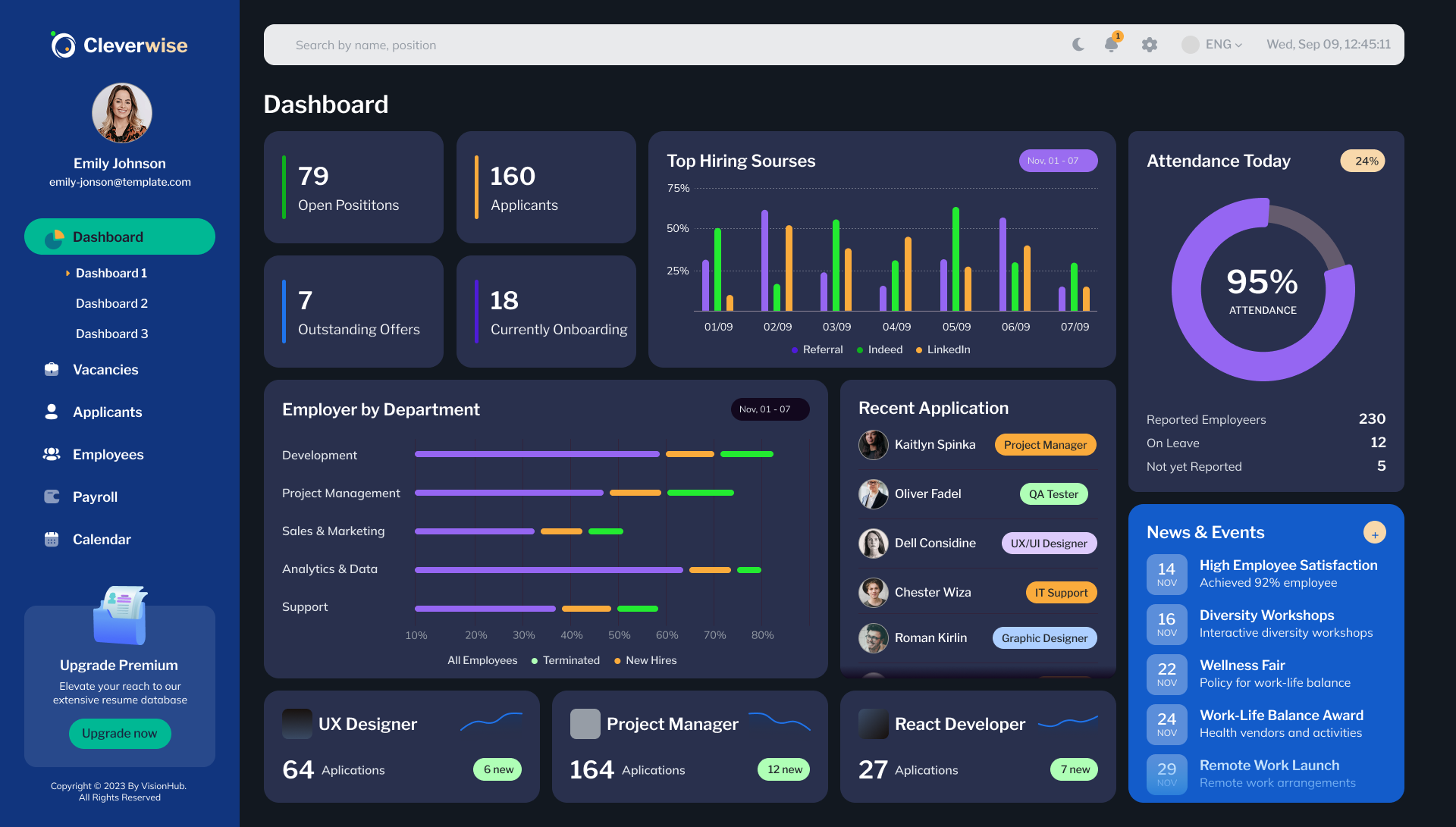
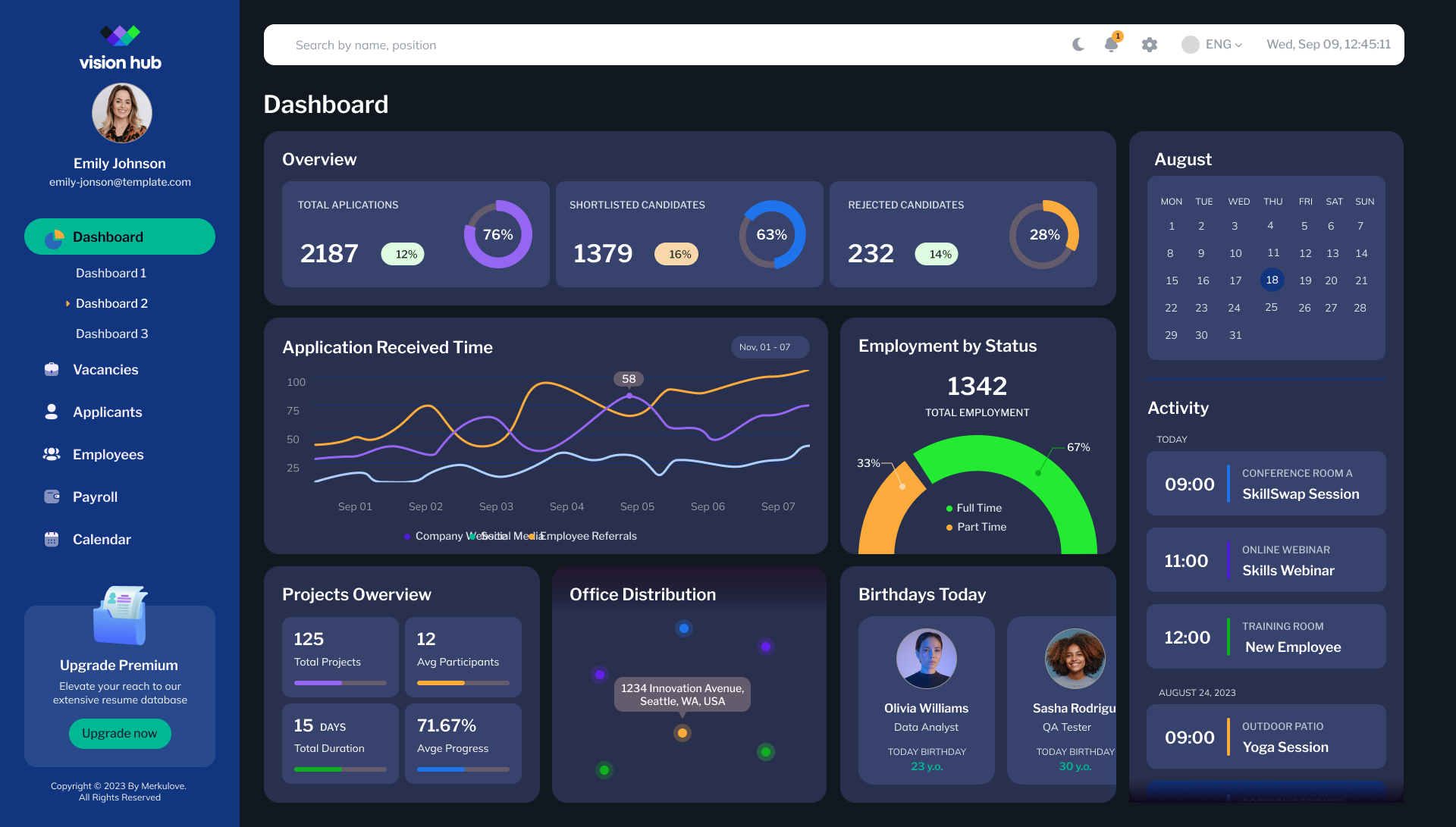
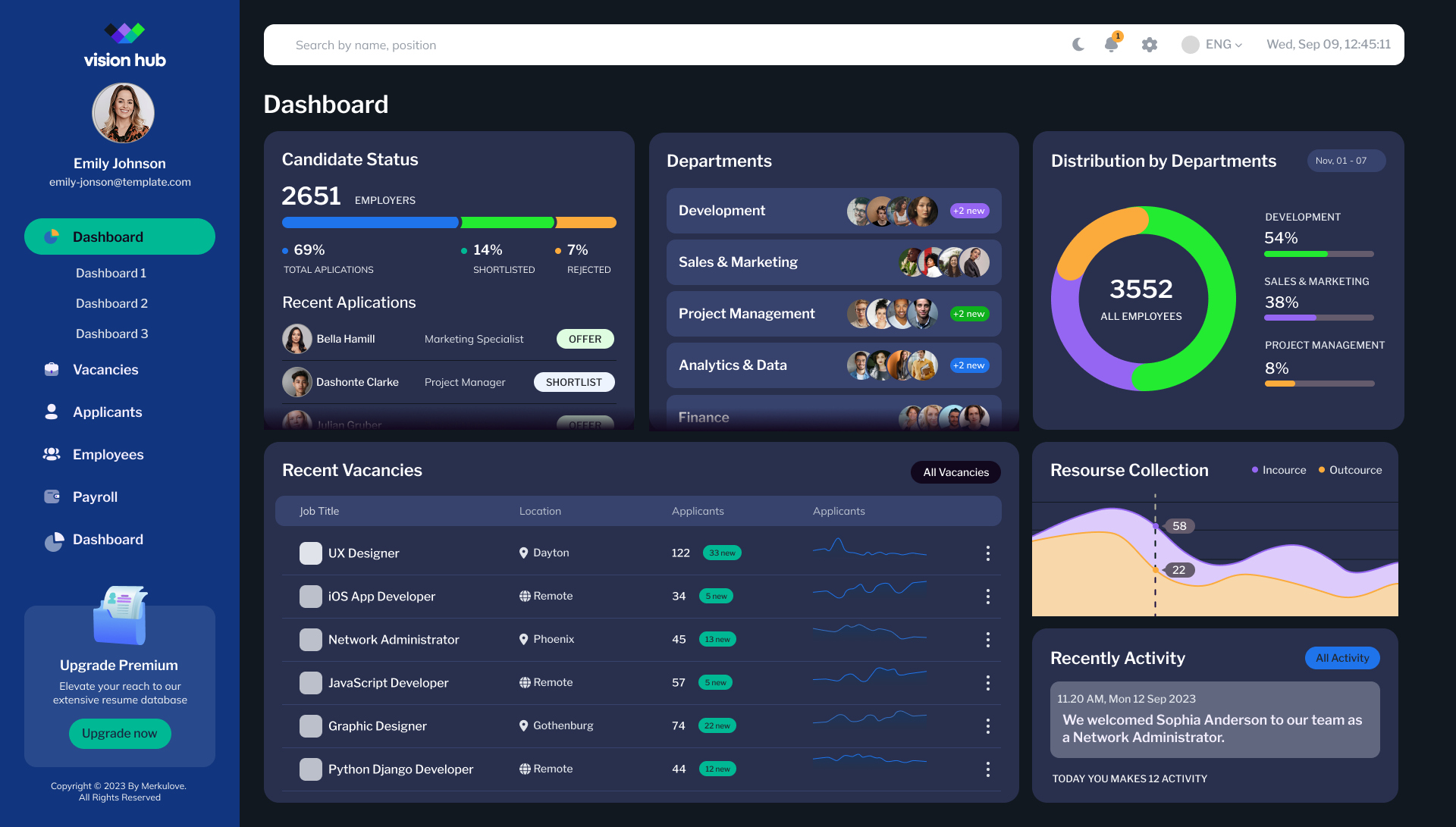
I designed the dashboard as the first thing HR opens with their coffee. It shows the four things they need before standup: who's joining, who's leaving, who's missing, and what payroll looks like. Everything else is one click away.
- Headcount and attrition with a 12-month trend chart, I made it the first widget
- Live hiring funnel grouped by stage so open roles don't hide in a list
- Pending leave approvals surfaced directly to whoever needs to act on them
- Payroll countdown with anomaly flags, anything unusual surfaces before the run
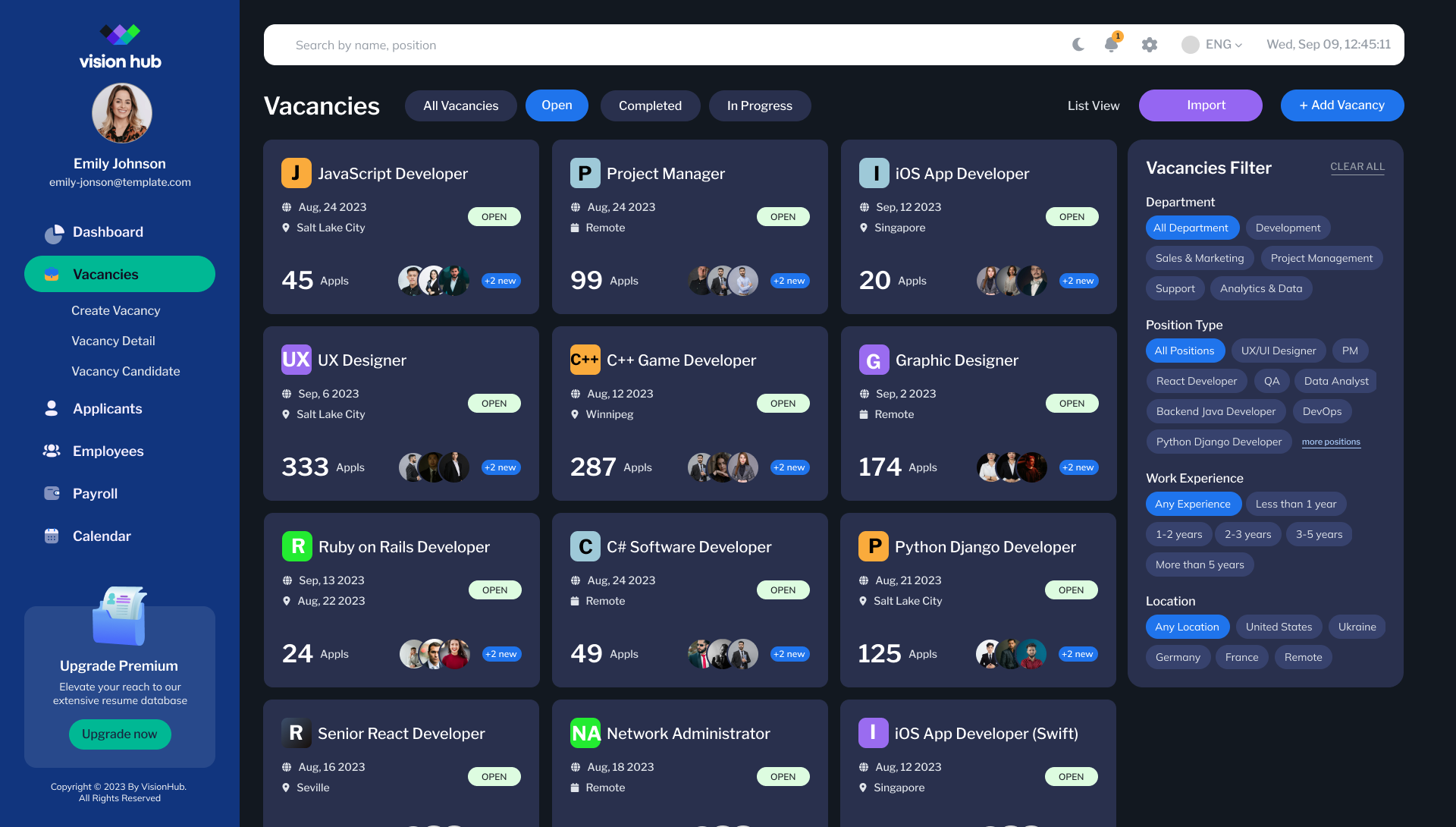
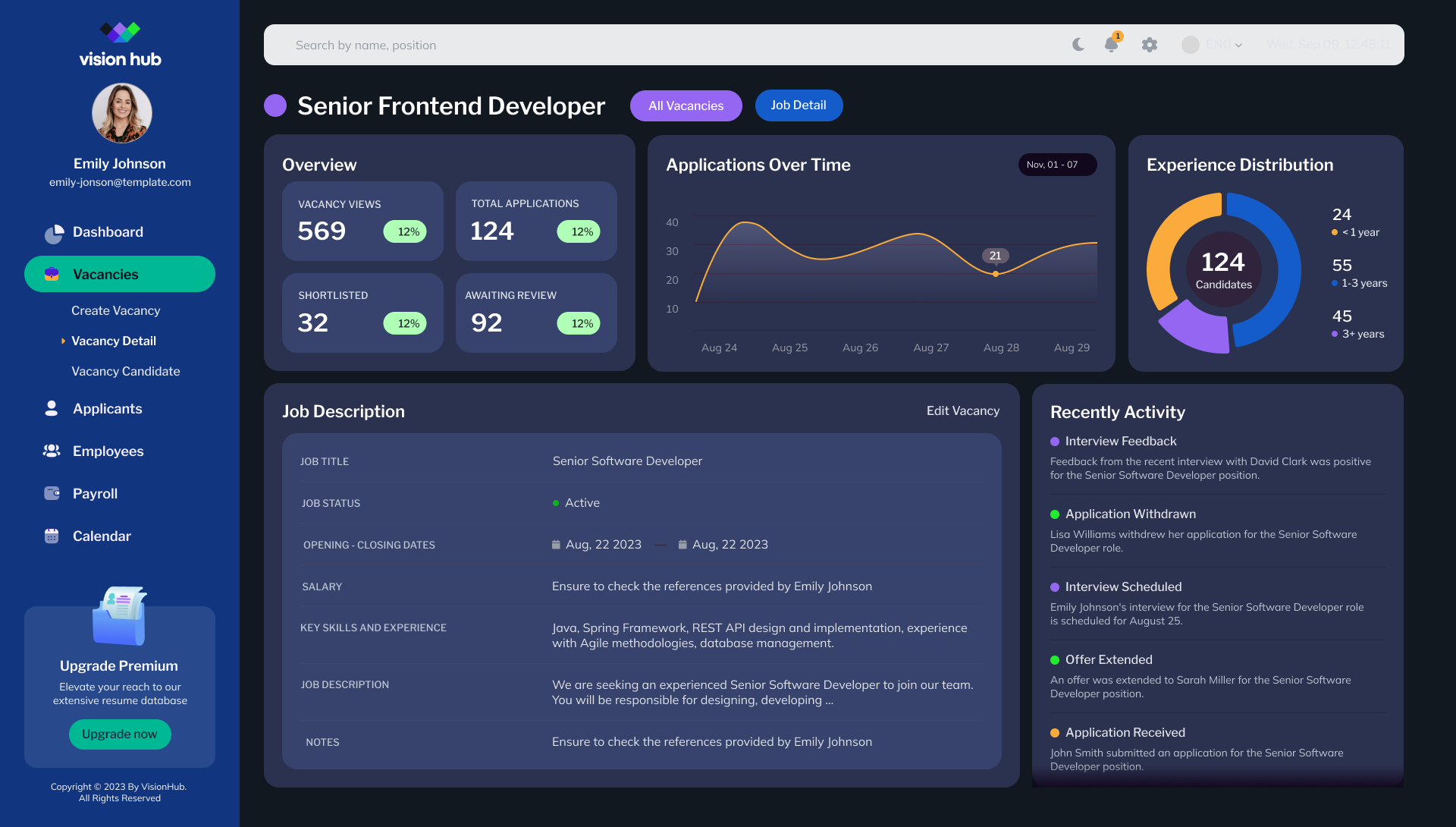
From open role to first interview, without leaving the page.
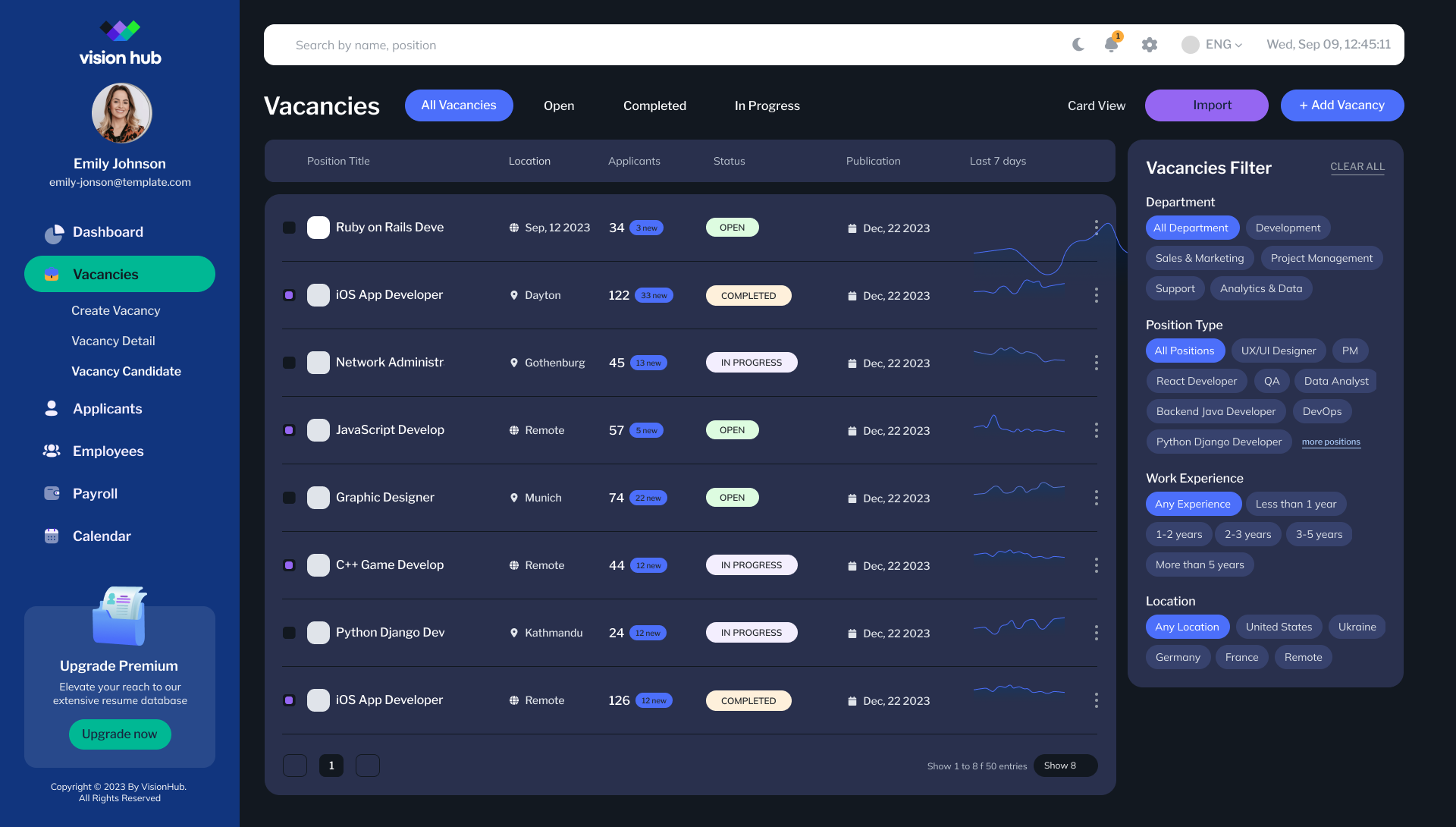
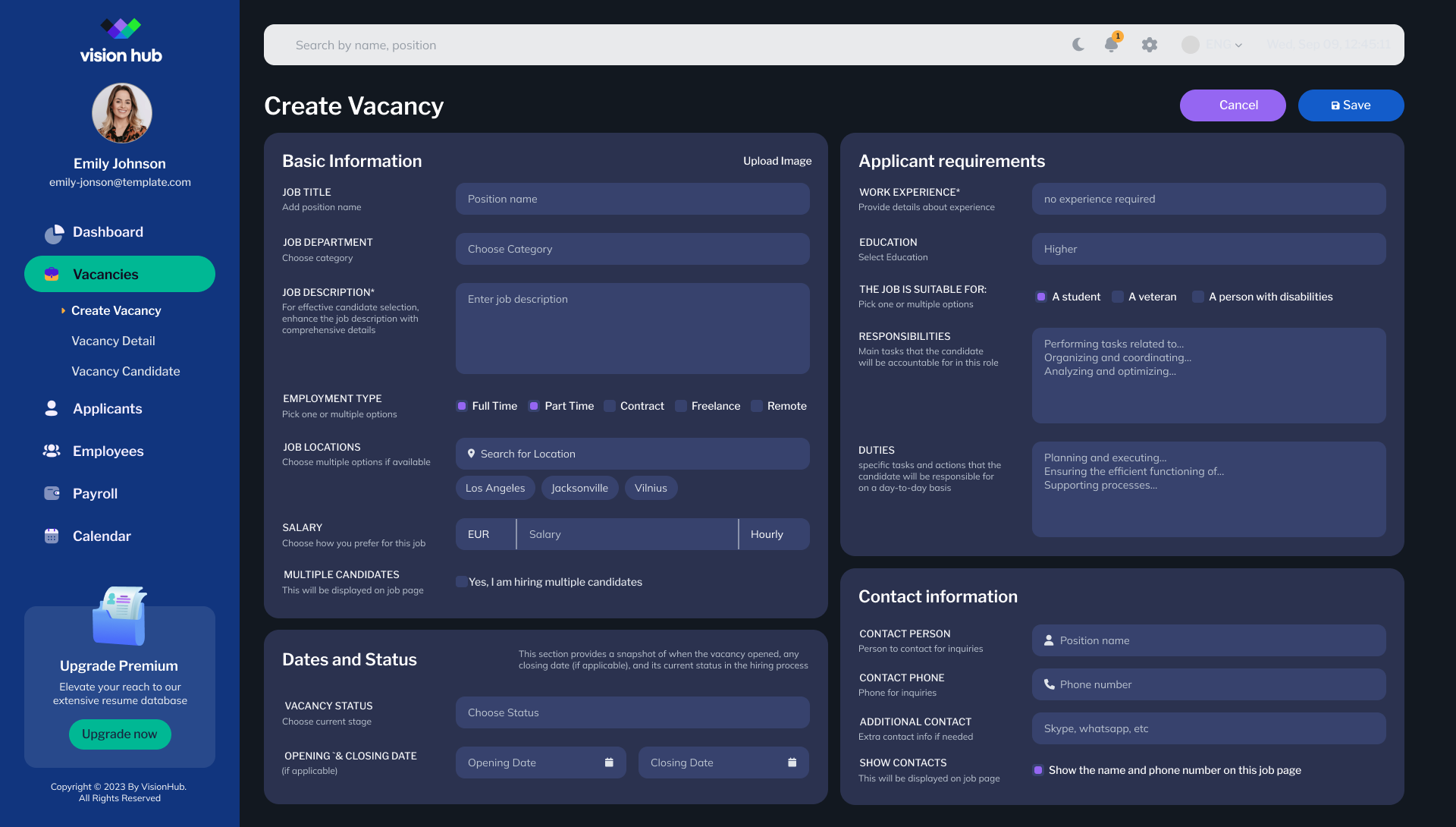
I gave vacancies two views: a dense sortable list for recruiters tracking the funnel, and an editorial card grid for hiring managers reviewing demand. Creating a role uses a focused single-column form so writing the job description doesn't fight with filling in metadata.
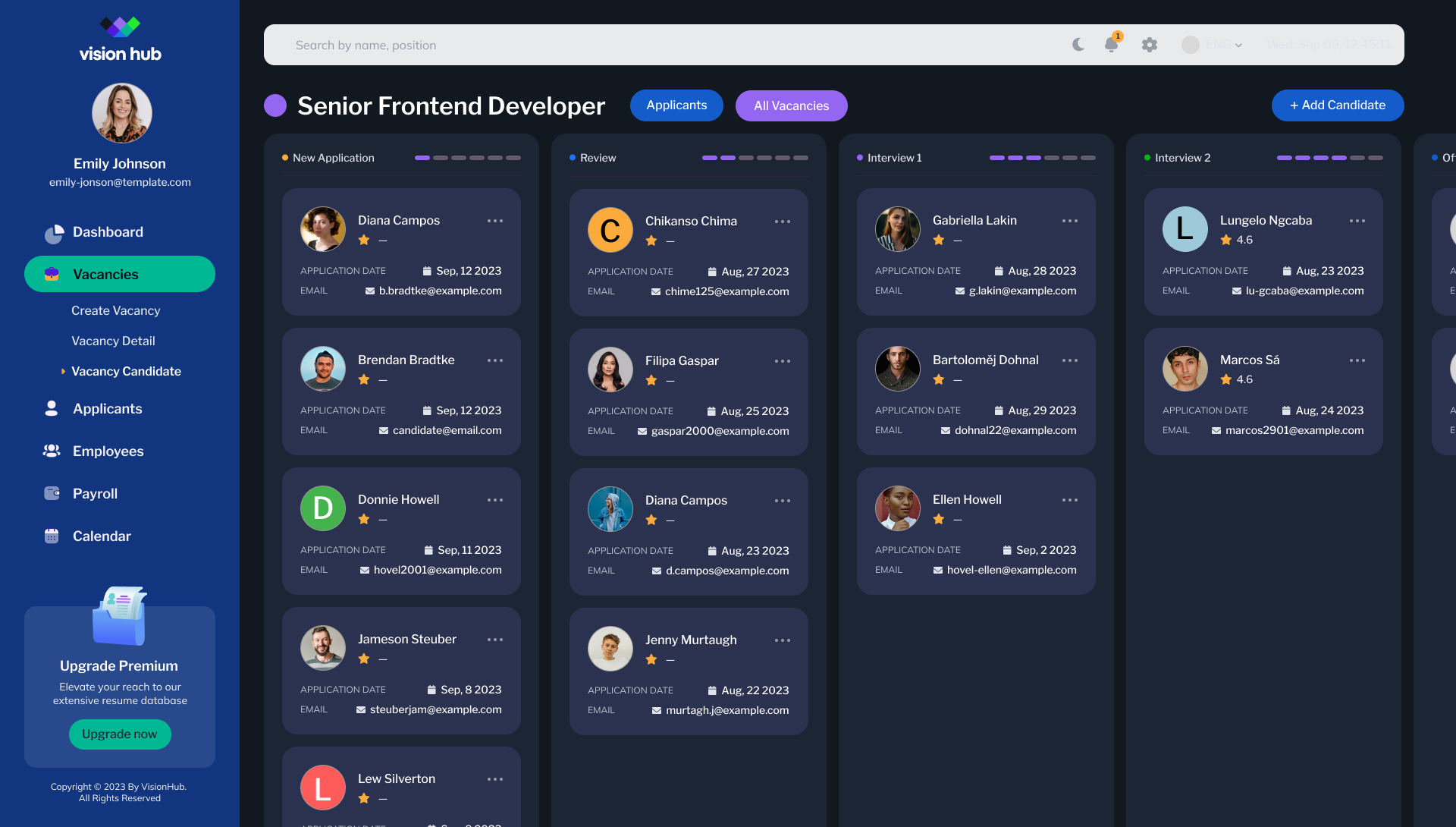
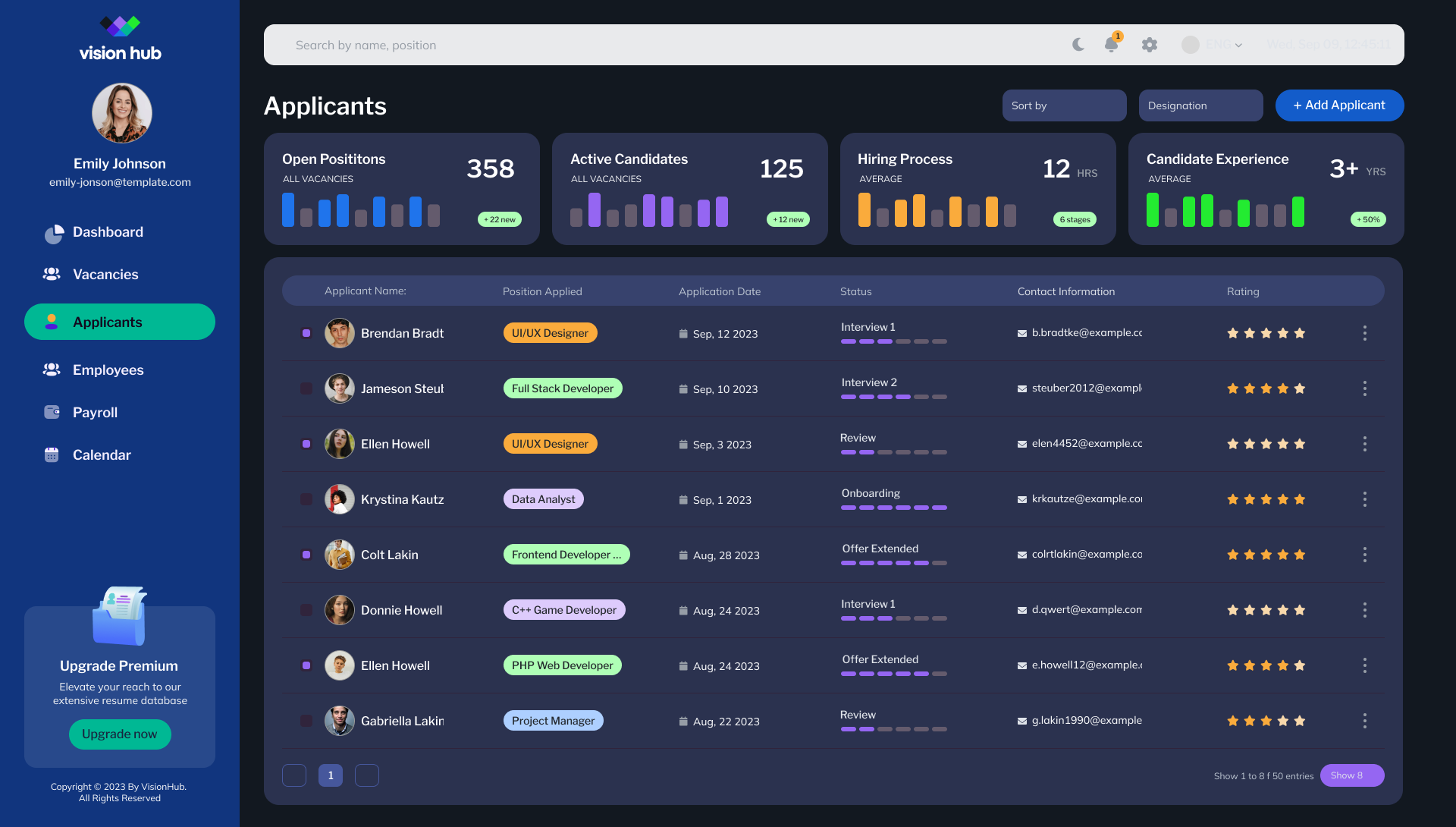
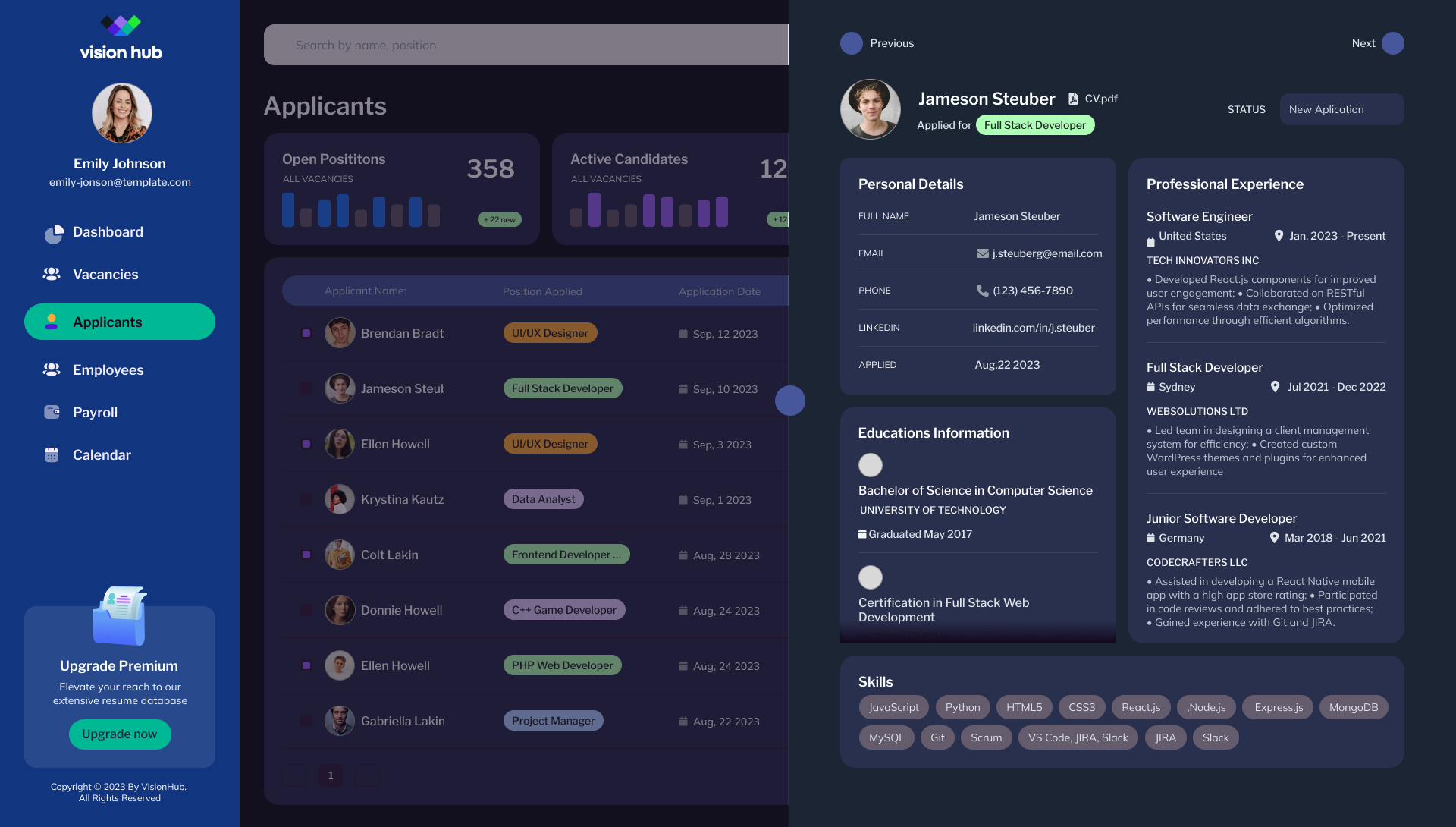
Every candidate, one click from move or reject.
I built the candidate surface around the action, advance, reject, schedule. CV, notes, scorecard and history sit in a side rail so the decision context is always a glance away. Bulk actions live at the list level for recruiters managing a messy funnel.
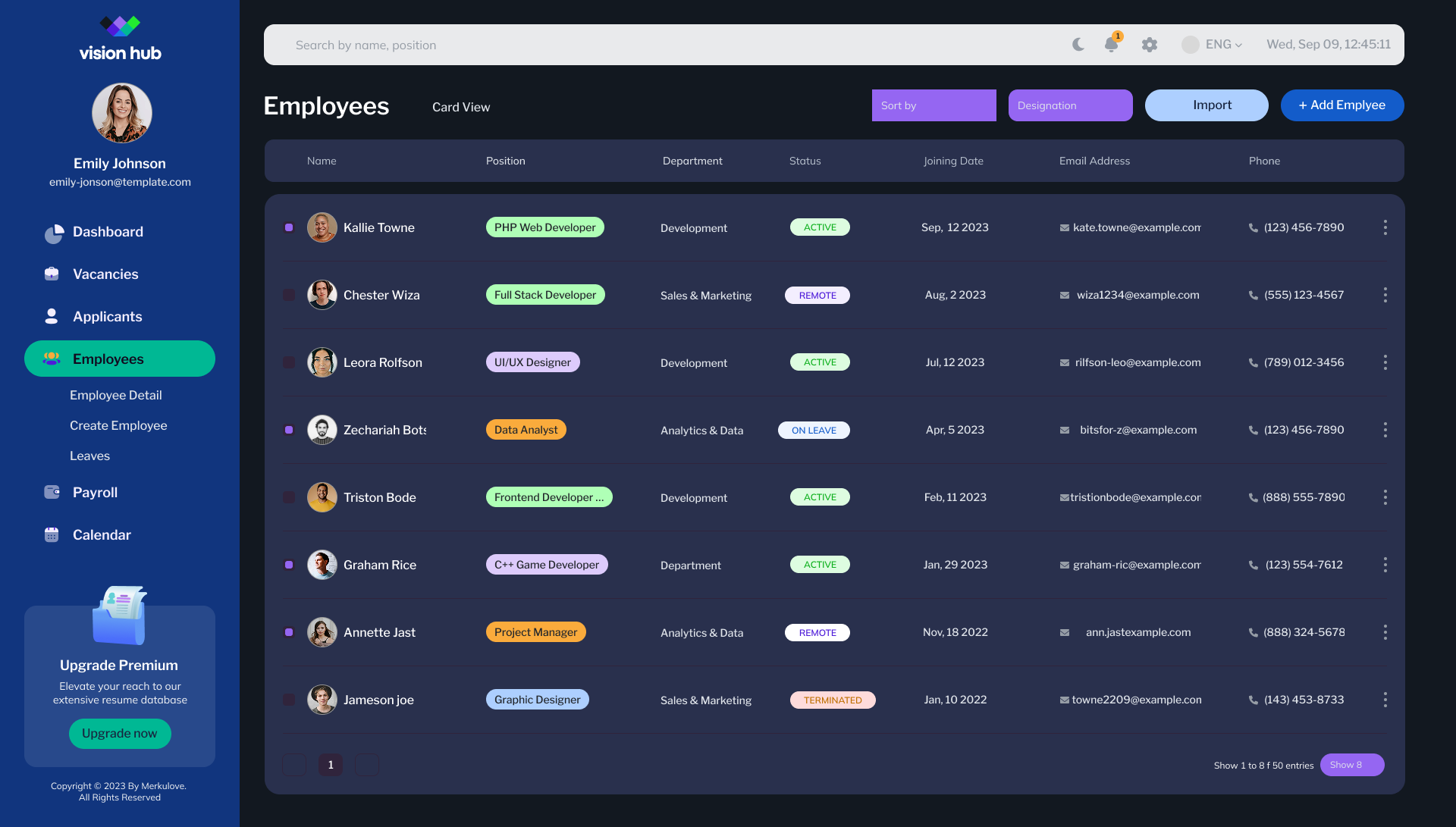
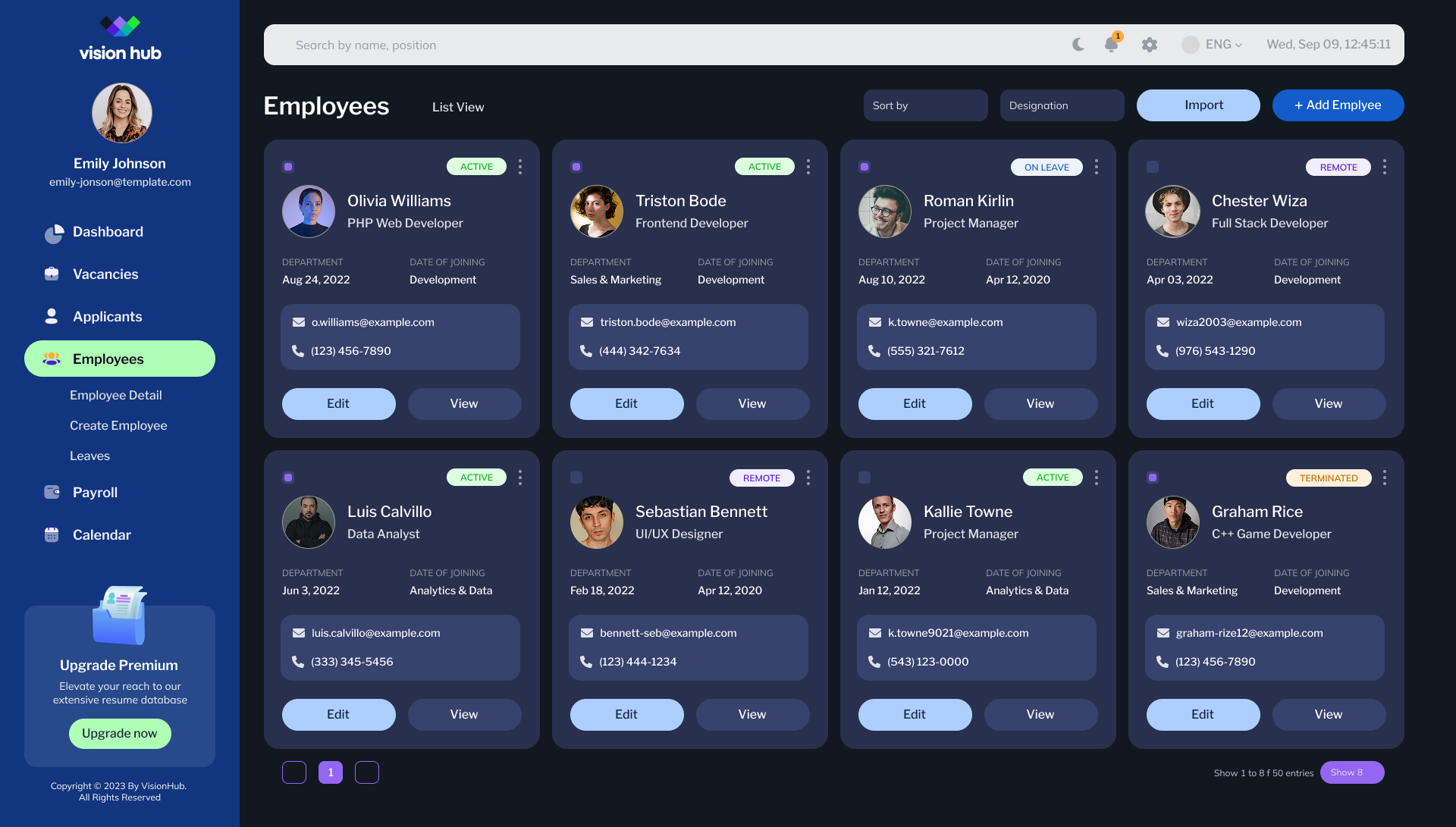
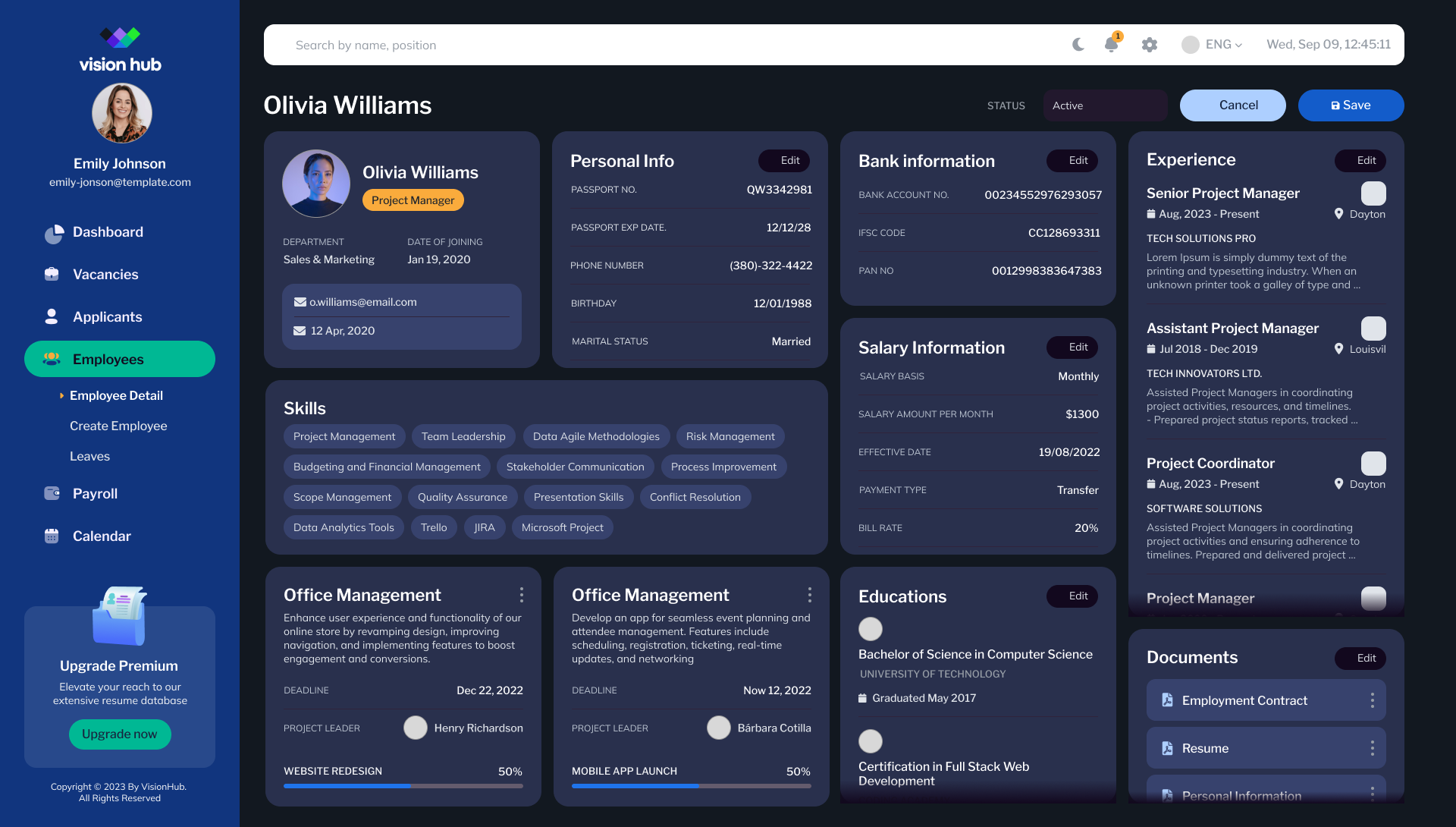
The people directory, built for actual HR use.
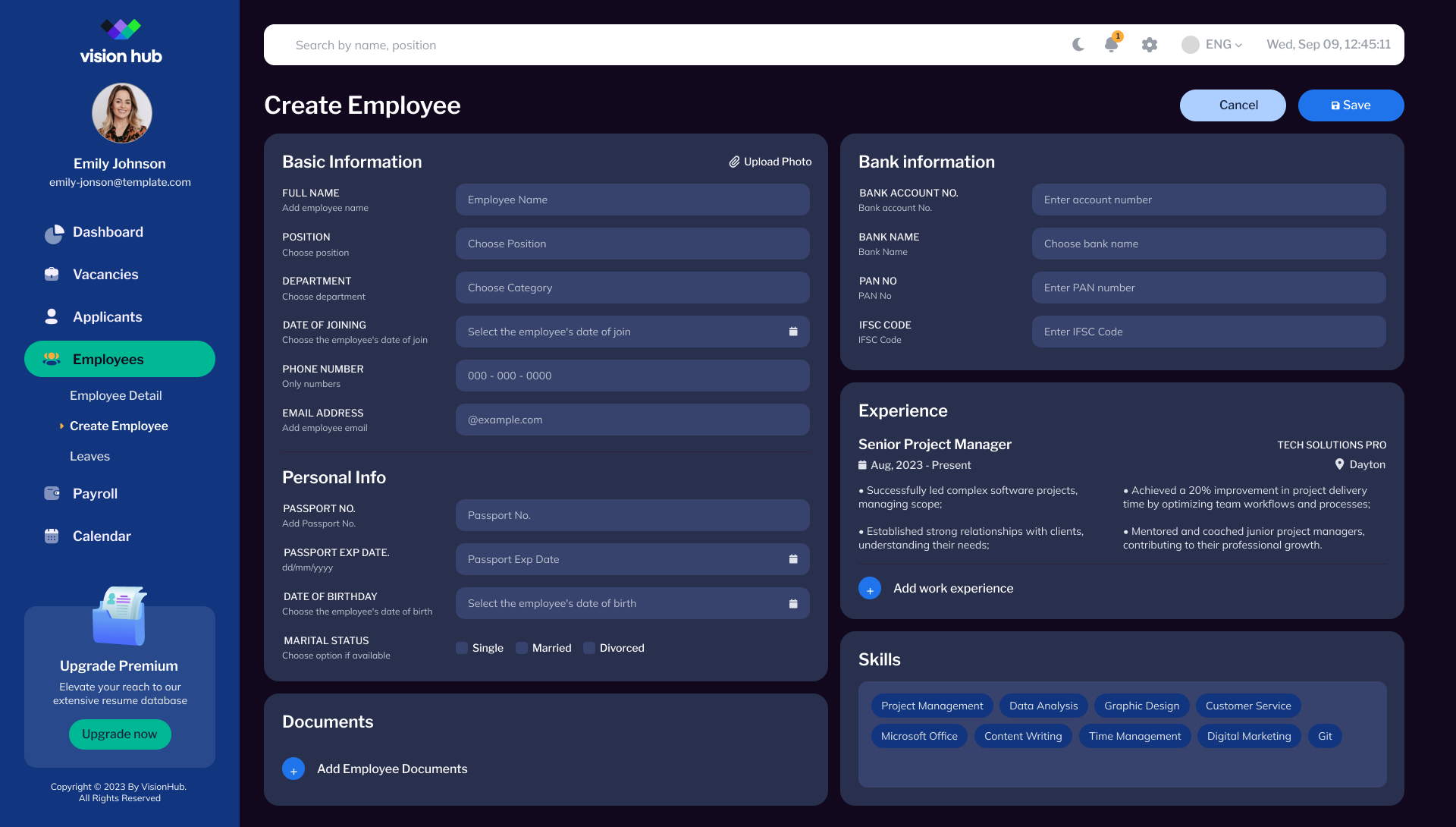
I built two views on the same data, a dense list for ops queries and a humanised grid for org-wide browsing. Employee profiles deepen into experience, documents and a history timeline. Adding a new joiner is a 3-step form I designed to never ask for the same field twice.
The two flows everyone dreads, I made them routine.
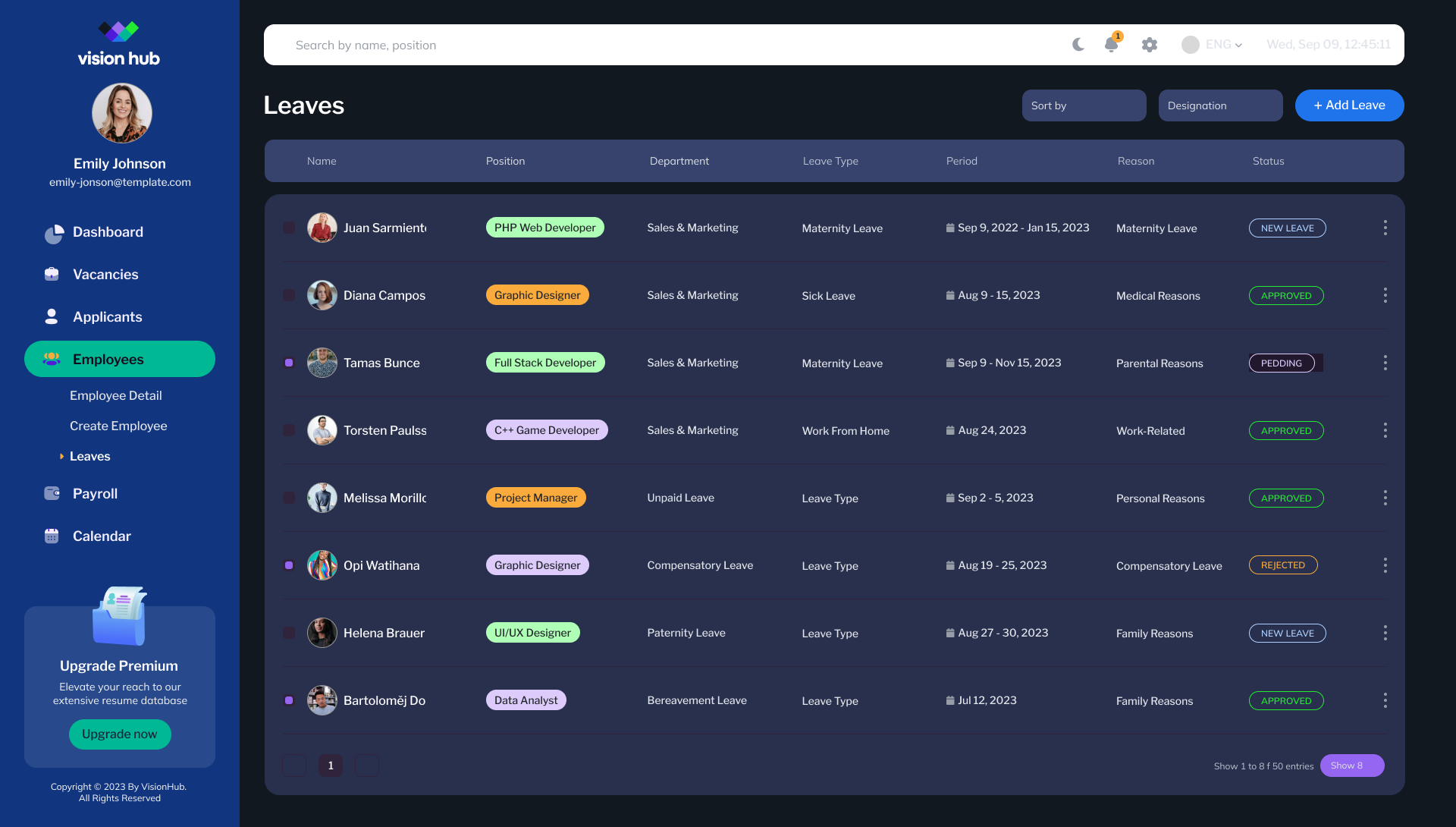
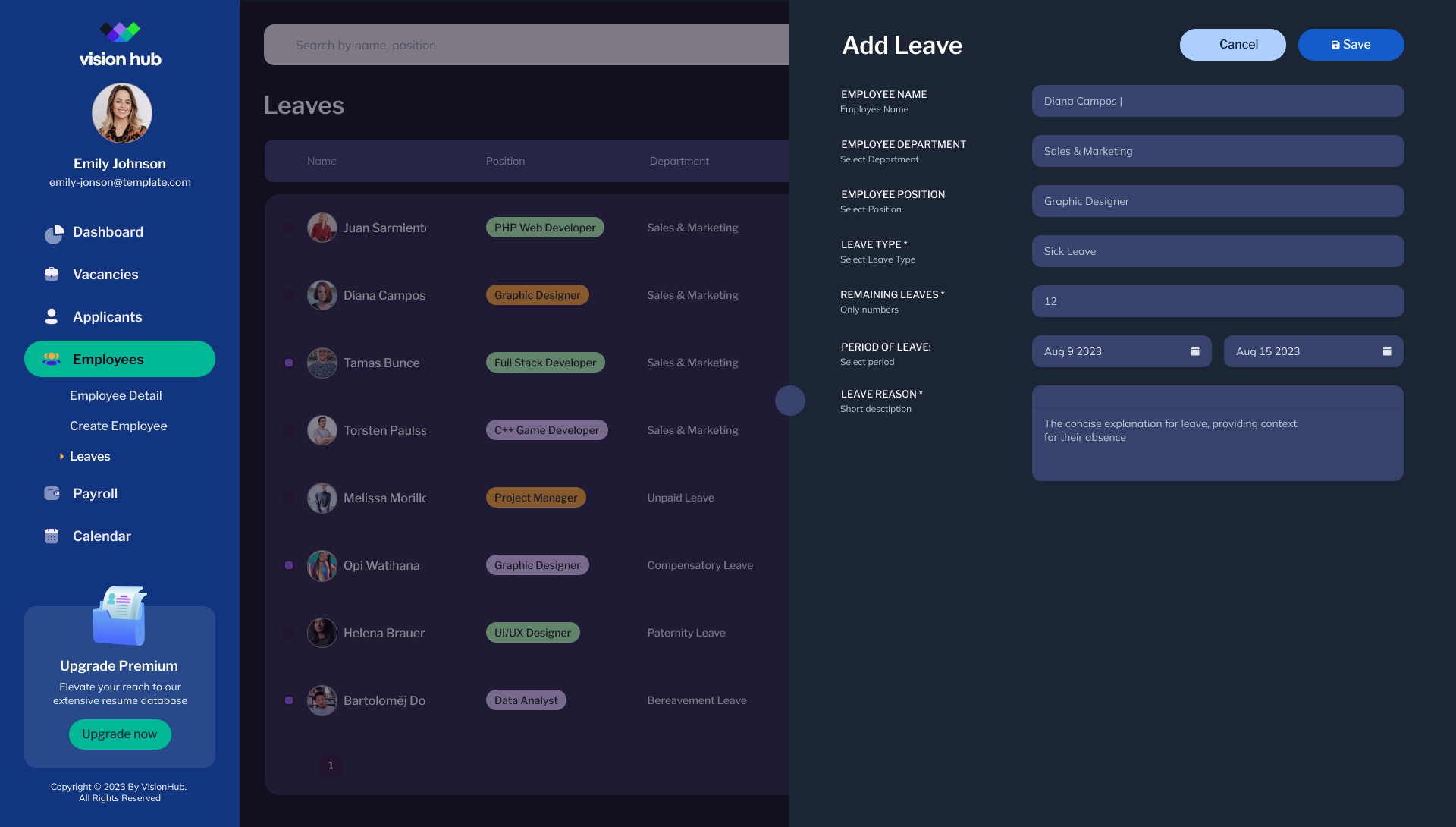
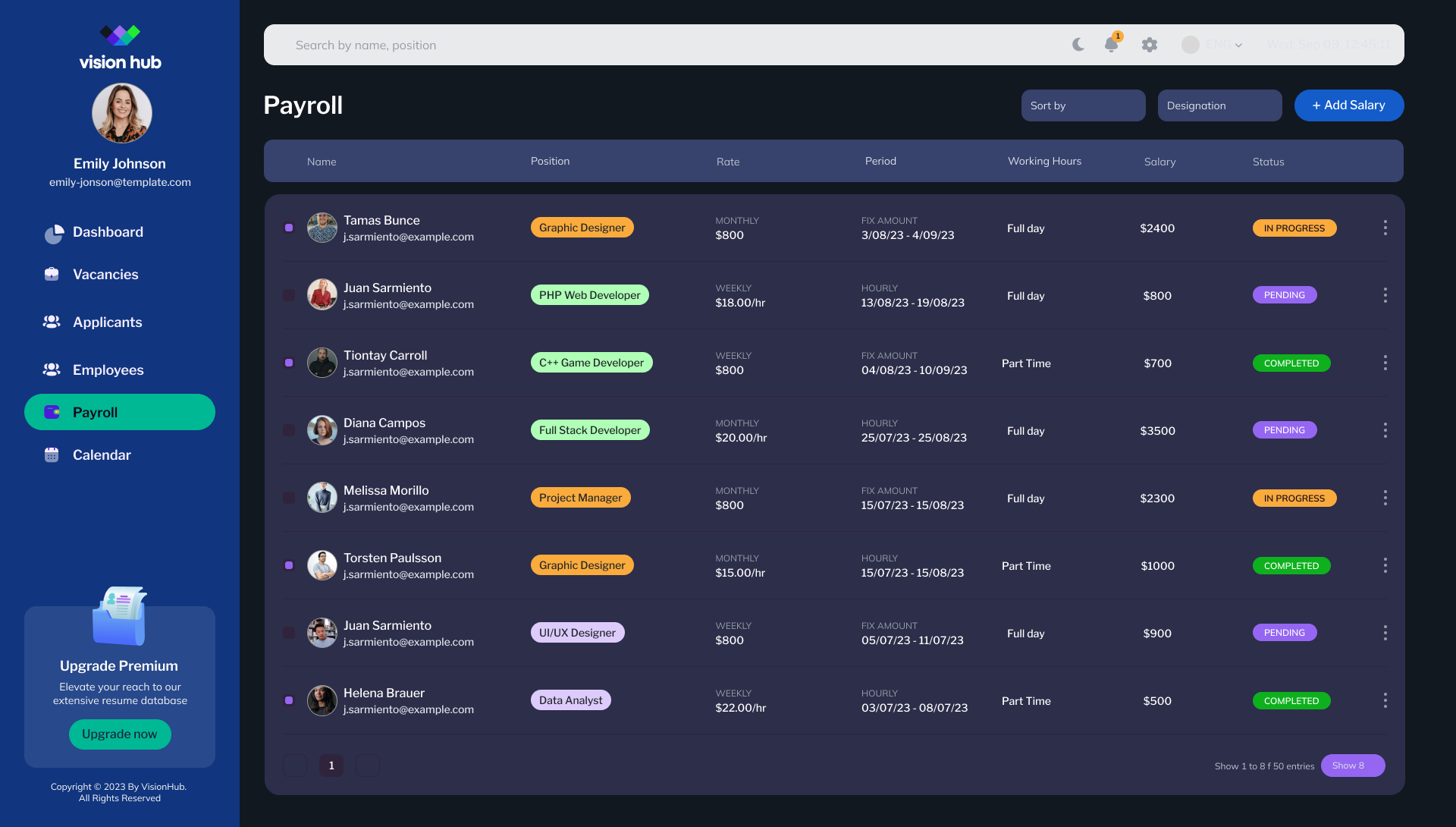
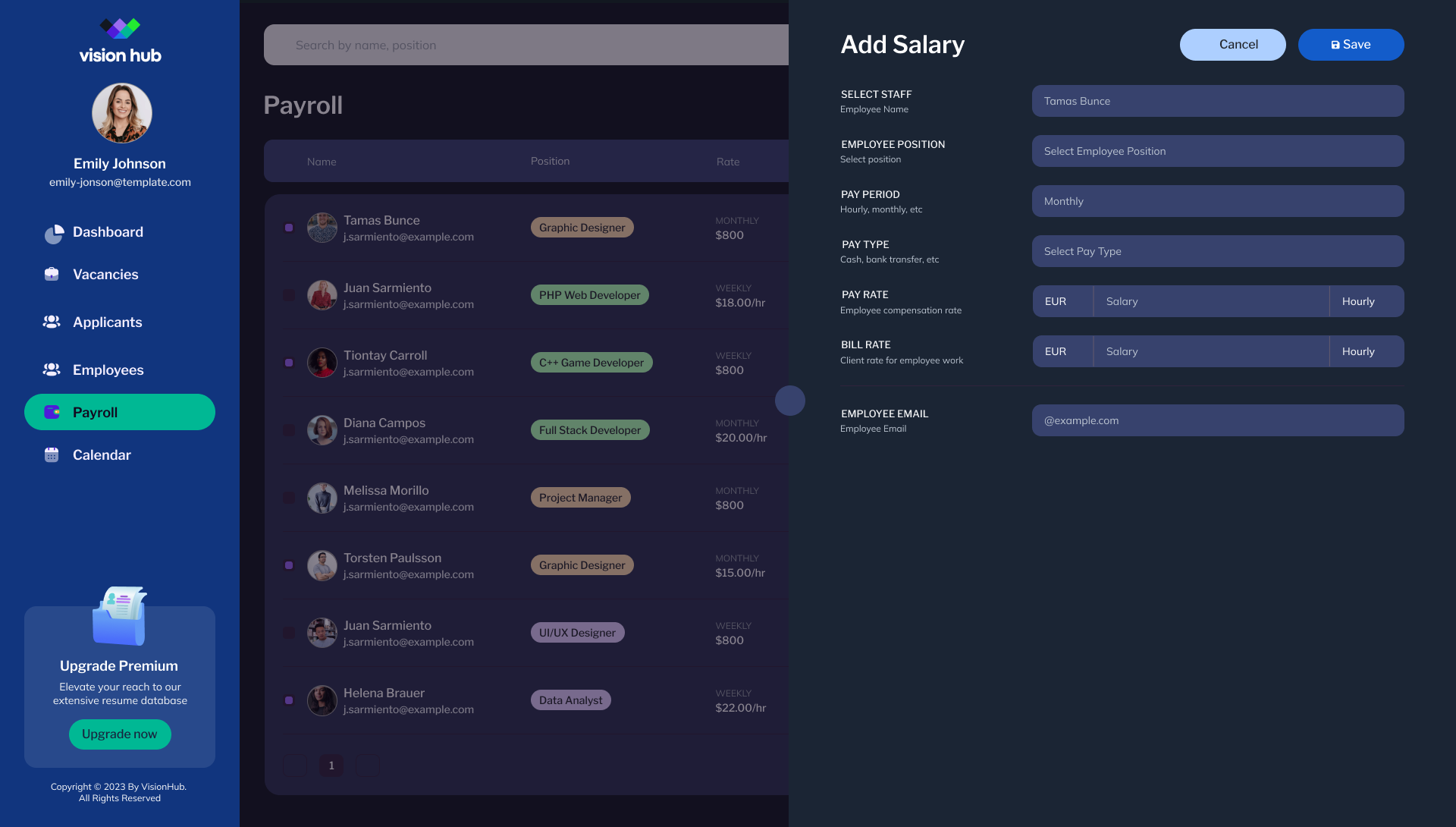
Leave and payroll are high-stakes, low-glamour work. I optimised for predictability: no surprises, no hidden state, every approval one tap. Anomalies surface; happy paths stay quiet.
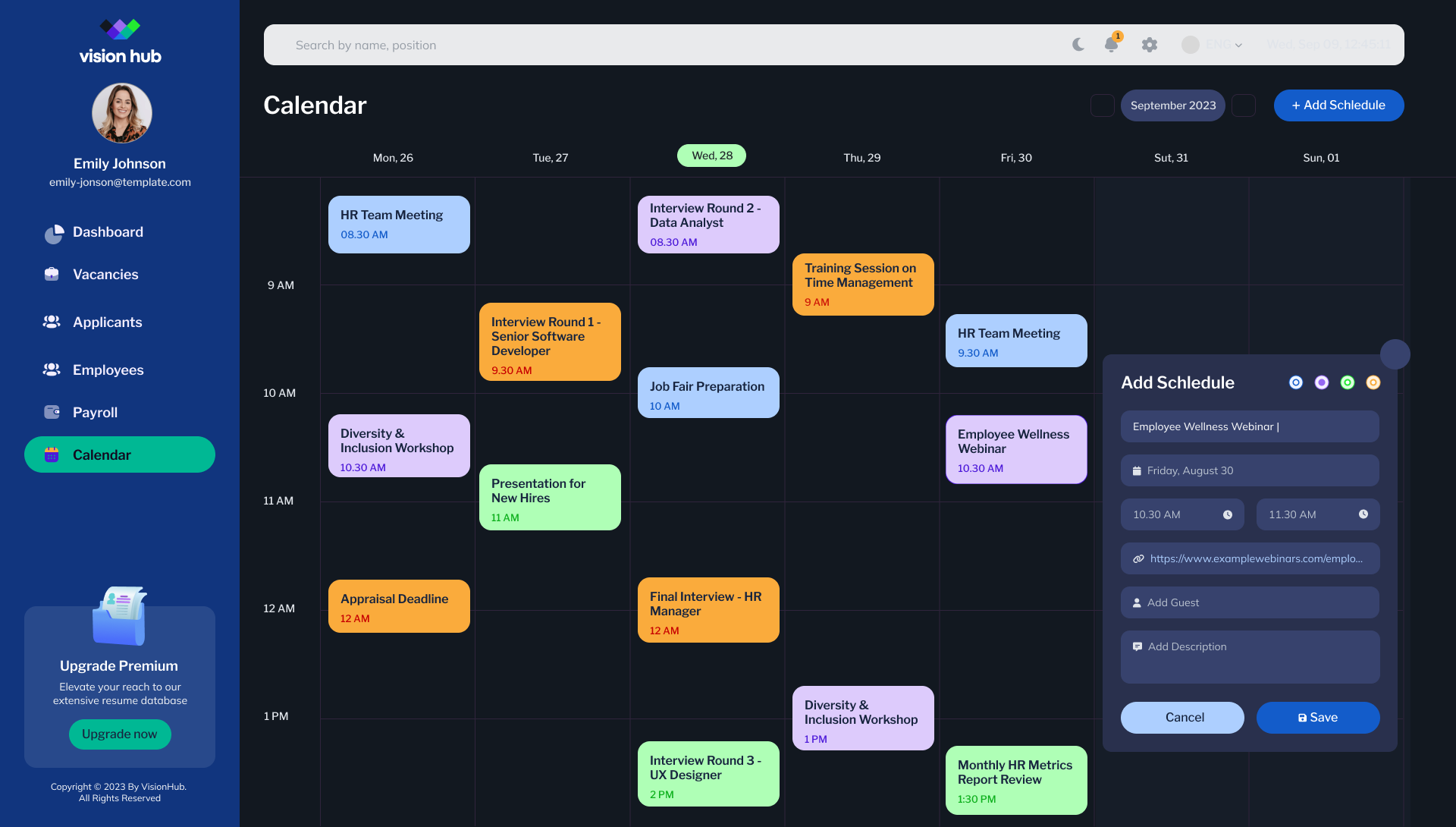
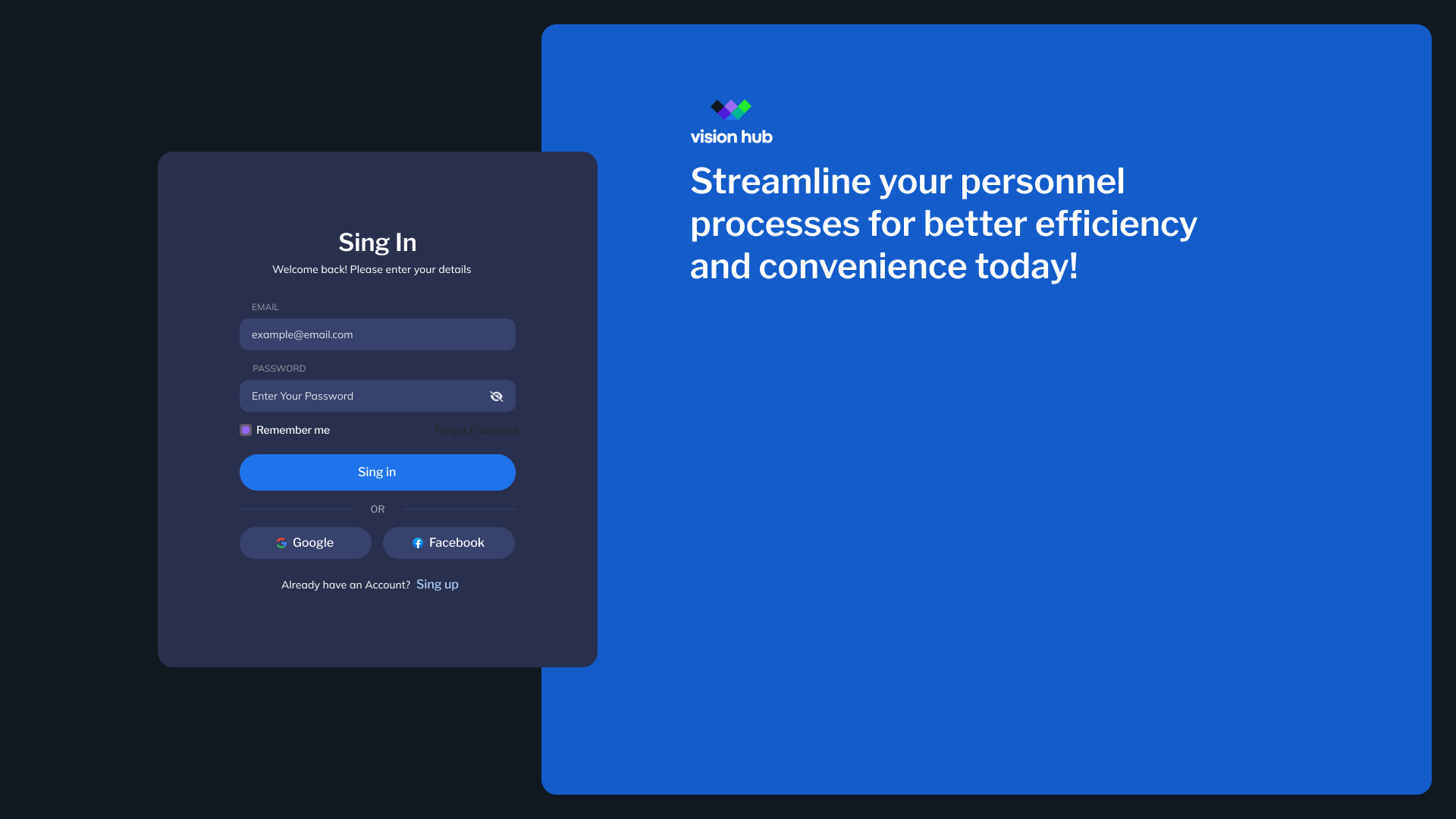
I overlaid leave, holidays, interviews and onboarding events on a single month grid in the team calendar, so HR spots coverage gaps the same way they read the day. Sign-in I kept to a quiet split-screen with one primary action.
One token set. Twenty screens. I didn't let them drift.
I built Vision Hub on a deliberately small system, 4 text sizes, an 8px spatial grid, a single brand blue with a green accent for positive deltas. Every table, chart, card and dialog routes through the same primitives. That's what keeps the dashboard calm when data volume grows.
What I learned building an HR product from scratch.
What worked
Treating the dashboard as a morning ritual, not a kitchen sink, kept it genuinely useful. I locked the table component early so every list (vacancies, applicants, employees, payroll) inherited the same sorting, density and empty-state behaviour automatically.
What I'd do differently
I'd test the payroll flow with finance stakeholders earlier. Their mental model for approval is very different from recruiting, the first iteration borrowed too much from the hiring views and I had to rebuild it around the approval ladder.
Designing an internal tool that people actually need to use?
I take on a small number of product design projects each quarter. Bring me messy spreadsheets and tribal knowledge, I'll give you a product people use by choice.
Enjoyed this case study?